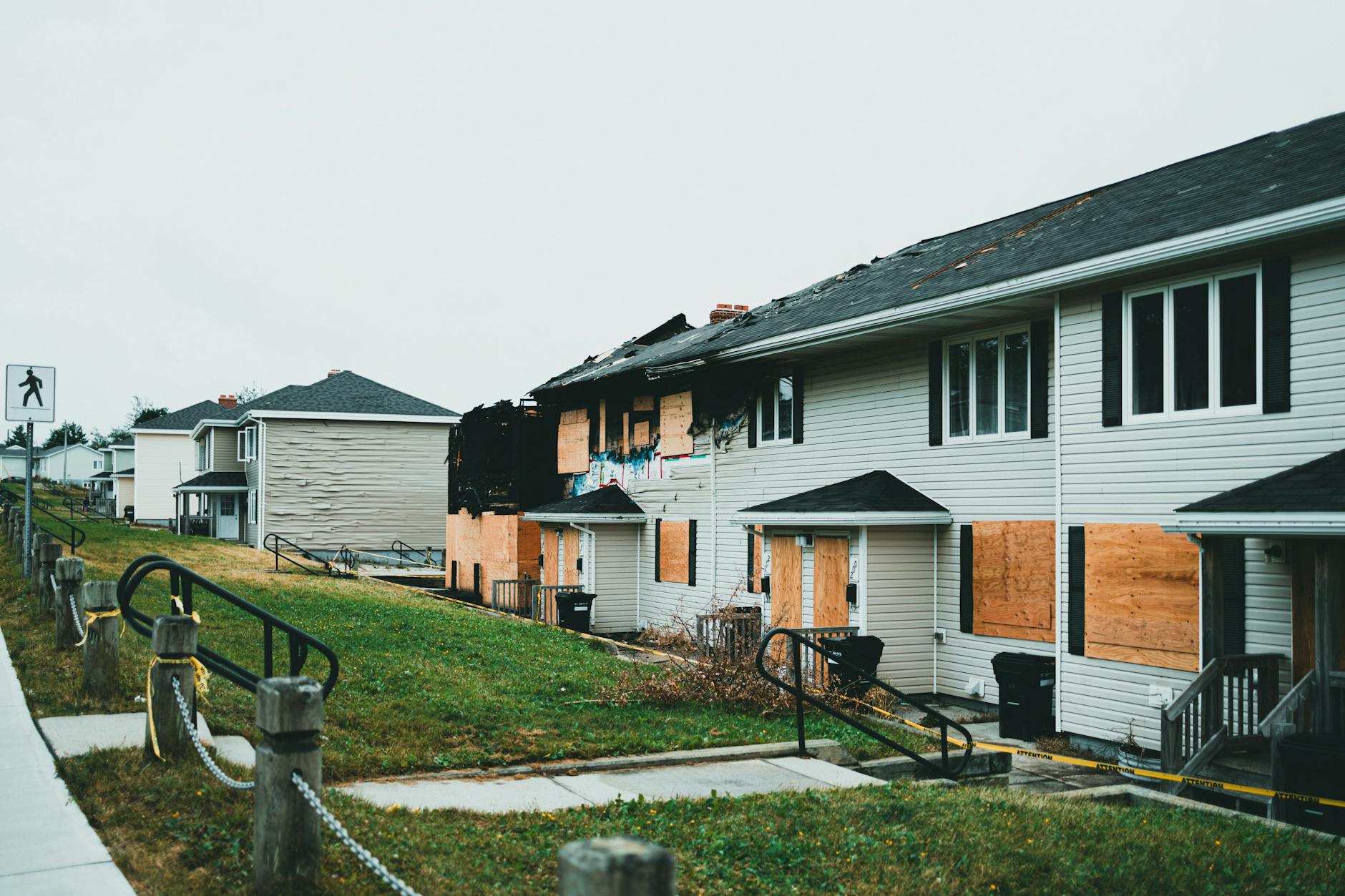
If you are dealing with a fire damaged house in Long Island, you are likely overwhelmed, emotionally drained, and unsure where to turn. Whether the fire was minor or devastating, the path forward can feel impossibly complicated – but you have more options than you might realize, and understanding them clearly can help you make the best decision for your family and your finances.
What to Do Immediately After a House Fire
Before you think about selling, there are several critical steps to take in the days following a house fire. These steps protect your legal standing, your insurance claim, and ultimately your ability to sell the property.
- Contact your homeowner’s insurance provider immediately. Most policies require you to report a fire claim within a specific window. Delaying this call can jeopardize your coverage. Document everything with photos and video before anything is removed or cleaned.
- Request a copy of the fire department incident report. This official record will be required for your insurance claim and will also be disclosed to potential buyers during any sale process.
- Do not start major cleanup or demolition without insurer approval. Your insurance company will likely want to send an adjuster before you touch anything significant. Unauthorized changes to the property could reduce your claim payout.
- Secure the property. Board up windows and doors, tarp the roof if needed, and post no-trespassing signs. Your insurer may also require this to prevent further damage or liability.
- Get an independent damage assessment. Beyond the insurance adjuster, hire a licensed contractor or public adjuster to give you an independent estimate. This gives you leverage in negotiations with the insurer and a realistic picture of repair costs.
- Understand your insurance payout options. Many policies offer an Actual Cash Value (ACV) payout or a Replacement Cost Value (RCV) payout. Knowing the difference affects your financial decisions significantly.
Can You Sell a Fire-Damaged House in New York?
The short answer is yes – absolutely. There is no law in New York State that prevents you from selling a fire-damaged property. However, the process comes with important legal and practical considerations that every Long Island homeowner should understand before proceeding.
Under New York State disclosure law, sellers are required to disclose known material defects on the Property Condition Disclosure Statement. Fire damage – whether it affected the structure, the electrical system, the plumbing, or the roof – qualifies as a material defect and must be disclosed. Attempting to conceal fire damage can expose you to serious legal liability after the sale closes.
If you are selling through a traditional real estate agent, fire damage will also affect the buyer’s ability to obtain a mortgage. Most conventional lenders require a property to be in habitable, insurable condition before they will approve financing. A fire-damaged home often fails that standard, which dramatically shrinks your pool of eligible buyers and can cause deals to fall through even after an accepted offer.
Cash buyers, on the other hand, do not rely on lender financing or appraisals. They evaluate the property themselves and make offers based on the as-is condition, which is why the cash sale route is often the most practical path for homeowners dealing with significant fire damage in Nassau County or Suffolk County.
The True Cost of Fire Damage Repairs on Long Island
One of the biggest mistakes homeowners make is underestimating what it actually costs to repair fire damage on Long Island. Labor and material costs in Nassau County and Suffolk County are significantly higher than national averages, and fire damage is rarely limited to what is visible on the surface.
Here is a general breakdown of common fire damage repair costs on Long Island:
| Type of Damage | Estimated Repair Cost (Long Island) | Notes |
|---|---|---|
| Smoke and soot cleaning | $2,000 – $6,000 | Whole-house professional remediation |
| Structural framing repairs | $10,000 – $50,000+ | Depends heavily on extent of burn |
| Roof replacement | $12,000 – $25,000 | Long Island averages run high |
| Electrical system replacement | $8,000 – $20,000 | Often required after any significant fire |
| Drywall and insulation | $5,000 – $15,000 | Often hidden damage extends repair scope |
| HVAC system replacement | $6,000 – $14,000 | Smoke damage often renders systems unusable |
| Kitchen or bathroom rebuild | $15,000 – $45,000+ | Common origin points for house fires |
| Permits and inspections | $1,500 – $5,000 | Required by Nassau and Suffolk municipalities |
A moderate house fire in a typical Long Island home can easily result in $75,000 to $150,000 or more in total repair costs. A severe fire affecting structural elements and multiple systems can push well beyond $200,000. These numbers do not account for carrying costs like property taxes, insurance, utilities, and temporary housing while repairs are underway – all of which continue to accumulate during a renovation that can take 6-18 months.
Your Options for Selling a Fire-Damaged Property
Long Island homeowners with fire-damaged properties generally have three main paths forward. Understanding the pros and cons of each helps you choose the right one for your situation.
Option 1: Repair and List with a Traditional Realtor
If your insurance payout is substantial and the damage is limited, repairing the home and listing it on the open market can maximize your sale price – in theory. In practice, this path comes with major risks. Renovations on Long Island rarely stay on budget or on schedule. Contractor availability is limited, permit processes in towns like Hempstead, Babylon, and Brookhaven can take months, and you will likely need to find and pay for temporary housing during the work. If the repairs reveal additional hidden damage (which is extremely common with fire), costs spiral quickly. This option works best for very minor, cosmetic fire damage where repair costs are modest and well-covered by insurance.
Option 2: List As-Is on the MLS
You can list a fire-damaged home on the Multiple Listing Service without making repairs, but be prepared for a challenging process. Most retail buyers using mortgage financing will not qualify for a loan on the property. You may attract investors or flippers, but they will negotiate hard, and deals can still fall through if they are unable to line up their own financing or if inspections reveal more than expected. Days on market for fire-damaged homes listed on the MLS tend to stretch considerably, and price reductions are common. Check out our full guide on selling a house as-is in Nassau County for more context on this option.
Option 3: Sell Directly to a Cash Buyer
This is the most straightforward path for most homeowners in this situation. A reputable cash home buyer like Square One Home Buyers will assess the property in its current condition, make a fair offer based on the as-is value, and close on your timeline – often in as little as 7-14 days. There are no repairs, no open houses, no mortgage contingencies, and no commissions or closing costs. You receive your proceeds directly and can move on with your life. This is especially valuable when you are already dealing with the emotional and financial stress of a fire.
Selling As-Is to a Cash Buyer: How It Works
If you have never sold a home to a cash buyer before, the process is simpler than most people expect. Here is how it works when you work with Square One Home Buyers on Long Island:
- Submit your property information. Share basic details about the home, the extent of the fire damage, and your situation. This takes just a few minutes online or over the phone.
- Receive a no-obligation cash offer. A local buyer will review the information and typically provide a written cash offer within 24-48 hours. There is no obligation to accept.
- Schedule a walkthrough if desired. The buyer may want to do a quick in-person assessment of the damage. This is not a formal inspection – it is simply a chance to confirm the condition before finalizing the offer.
- Accept the offer and choose your closing date. You pick the timeline that works for you. Closings can happen in as little as 7 days or can be extended if you need more time to make arrangements.
- Close at a local title company. The transaction is handled professionally, with a licensed title company ensuring the sale is clean and legal. You receive your funds at closing.
There are no realtor commissions (typically 5-6% in a traditional sale), no closing costs charged to the seller, no repair requests, and no financing contingencies that can cause deals to collapse. For a fire-damaged property, this certainty has enormous value. Our article on how long it takes to sell a house for cash on Long Island walks through the full timeline in detail.
You may also want to explore selling your damaged house for cash directly on our site to learn more about how Square One handles all types of damaged properties.
What Cash Buyers Look for in Fire-Damaged Homes
Understanding how a cash buyer evaluates a fire-damaged property helps you know what to expect from the offer you receive and how to communicate honestly about the condition of your home.
Cash buyers and real estate investors evaluate fire-damaged homes based on several key factors:
- Structural integrity. Is the foundation, framing, and load-bearing structure intact? Homes where the fire affected primary structural elements require significantly more investment to rehabilitate and will be priced accordingly.
- Extent of smoke and soot damage. Smoke infiltrates HVAC systems, insulation, and wall cavities throughout the entire home, even in rooms untouched by flames. Full remediation is costly and is factored into any offer.
- Roof condition. A compromised roof allows water damage to compound the fire damage over time. The longer a fire-damaged home sits exposed to the elements, the worse the secondary damage becomes.
- After-Repair Value (ARV). The buyer estimates what the home would be worth after full rehabilitation, then works backward from that number accounting for repair costs, holding costs, and their margin. Location matters enormously here – a fire-damaged home in a desirable town like Huntington, Garden City, or Massapequa has a higher ARV than the same home in a less active market.
- Existing insurance settlement status. If you have already received or are in the process of receiving an insurance payout, that information may be relevant to the sale structure. Be upfront about this with any buyer.
Fire-Damaged Home Sales: By the Numbers
Here is a quick summary of the key figures Long Island homeowners should keep in mind when considering their options after a house fire:
- $75,000 – $150,000+: Typical repair cost for moderate fire damage in a Long Island home, based on current labor and material costs in Nassau and Suffolk counties.
- 6 to 18 months: Average time to complete fire damage repairs and re-list a home through a traditional sale process, accounting for permitting delays common in Long Island municipalities.
- 5-6%: Realtor commission on a traditional sale, which on a $500,000 Long Island home equals $25,000 – $30,000 paid out of proceeds.
- 7-14 days: Typical closing timeline when selling to a cash home buyer, compared to 45-90 days with a traditional financed sale.
- $0: Out-of-pocket costs to the seller when working with Square One Home Buyers – no repairs, no commissions, no closing costs.
- 490,000: Number of home structure fires reported in the U.S. annually according to the National Fire Protection Association, making this a situation thousands of families navigate every year.
- 64%: Share of U.S. homes that are underinsured according to consumer financial research, meaning many homeowners receive payouts that do not fully cover true rebuild costs.
These numbers underscore why many Long Island homeowners in this situation choose to sell as-is rather than attempt to rebuild. If you are also dealing with financial pressure alongside fire damage – such as a mortgage you are struggling to maintain – our resource on what to do if you can’t afford your mortgage may provide additional helpful context.
Frequently Asked Questions
Do I have to disclose fire damage when selling my house in New York?
Yes, New York State law requires sellers to disclose known material defects, and fire damage qualifies as a material defect on the Property Condition Disclosure Statement. Failing to disclose fire damage can expose you to legal liability after the sale, including lawsuits for misrepresentation. Cash buyers who purchase as-is are fully aware of the damage, which simplifies the disclosure process considerably compared to a traditional sale where undisclosed defects often derail transactions.
Will my homeowner’s insurance payout affect a cash sale?
Receiving an insurance payout does not prevent you from selling your fire-damaged home for cash. However, if the insurance proceeds were specifically designated for repairs that have not been completed, there may be considerations around how those funds are handled at closing. You should consult with your insurance company and a real estate attorney to understand your specific situation. Most cash buyers on Long Island are experienced with insurance-involved transactions and can guide you through the nuances.
What if the fire-damaged house has a mortgage on it?
Having an existing mortgage does not prevent a cash sale. At closing, the outstanding mortgage balance is paid off from the sale proceeds, just as it would be in any other home sale. If the sale price is lower than what you owe on the mortgage, that becomes a short sale situation, which requires lender approval. A reputable cash buyer will be upfront about how this works and can connect you with resources to help navigate it.
How much will a cash buyer pay for a fire-damaged house on Long Island?
Cash buyers calculate offers based on the home’s estimated after-repair value (ARV) minus the cost of repairs, holding costs, and a reasonable profit margin. Because Long Island home values are relatively high compared to national averages, fire-damaged homes here can still carry meaningful equity even after accounting for substantial repair costs. The offer you receive will be less than a fully renovated market value, but it eliminates repair risk, time, commissions, and carrying costs – factors that significantly close the gap in real terms.
Can I sell a house that has been condemned after a fire in Long Island?
Yes, condemned fire-damaged properties can be sold to cash buyers. A condemnation notice from a local municipality – such as the Town of Babylon, Town of Islip, or Town of Hempstead – does not eliminate your ownership rights or your ability to transfer title. Cash investors regularly purchase condemned properties, handle the legal process of addressing the violations, and rehabilitate them. This is actually one of the situations where a cash sale is often the only practical option, since no retail buyer using financing could purchase a condemned home.
Ready to Get a Cash Offer for Your Fire-Damaged Home?
Square One Home Buyers purchases fire-damaged homes throughout Long Island in any condition – no repairs, no fees, and no hassle. Get your free, no-obligation cash offer today and take the first step toward putting this behind you.